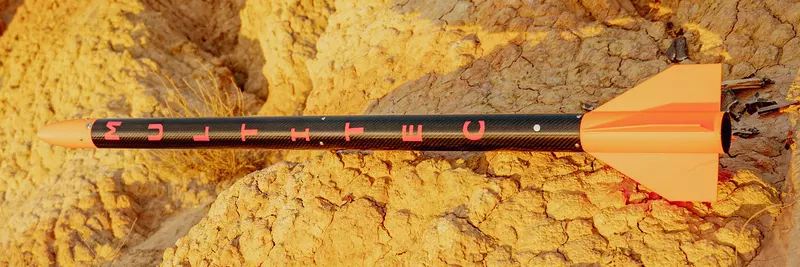
Lucentum · L1 rocket
1.38 m long, 60 mm across and 1.76 kg with a Cesaroni H-class motor. Inside, the MT1 flight computer, designed and built by the team, recorded the whole flight 416 times a second.
Lucentum was the first step: a high-power rocket with a flight computer of our own, the MT1. With what we learned we are now designing a bigger, faster rocket with two-stage recovery.
1.38 m long, 60 mm across and 1.76 kg with a Cesaroni H-class motor. Inside, the MT1 flight computer, designed and built by the team, recorded the whole flight 416 times a second.
Target: 8,000 ft (about 2,400 m), close to the speed of sound. An 80 mm fibreglass body in two sections, a Von Kármán nose cone (a low-drag shape) with a metal tip, a drogue at apogee and the main chute at 250-300 m, and live LoRa radio telemetry (long range) with GNSS position (like GPS).
No carbon fibre: it blocks the GPS and telemetry signals.
| Lucentum | Next | |
|---|---|---|
| Altitude | 459 m (flown) | ~2,400 m (8,000 ft) |
| Speed | 94 m/s | Close to Mach 1 |
| Diameter | 60 mm | 80 mm, two sections |
| Structure | 60 mm tube, four swept fins | Laminated fibreglass; plate fins |
| Nose cone | Ogive | Von Kármán, metal tip |
| Motor | H class (Cesaroni 232H123) | K class (K515 candidate) or our own |
| Recovery | One chute, motor ejection charge | Drogue at apogee + main at 250-300 m |
| Telemetry | On-board log + WiFi on the ground | Live LoRa up to ~2.5 km |
| Camera | From the ground | On board + servo tracking |
What we are working on and what comes next. What is already done is in Our story.
80 mm fibreglass, Von Kármán nose cone and two-stage recovery.
We are organising the team by work lines and opening it to UA students.
We are looking for companies that want to fly with us.
LoRa telemetry up to 2.5 km, parachute ejection and an on-board camera.
APCP propellant, casing, nozzle, test stand and hydrostatic test, with the UA chemical engineering labs.
Composite lay-up, ANSYS analysis and aerodynamic testing.
About 2,400 m with two-stage recovery and live telemetry.
We simulate the rocket in OpenRocket, design the board in KiCad with an automated pipeline that generates the PCB end to end, and assemble it by hand. Everything is documented so the next person can carry on.
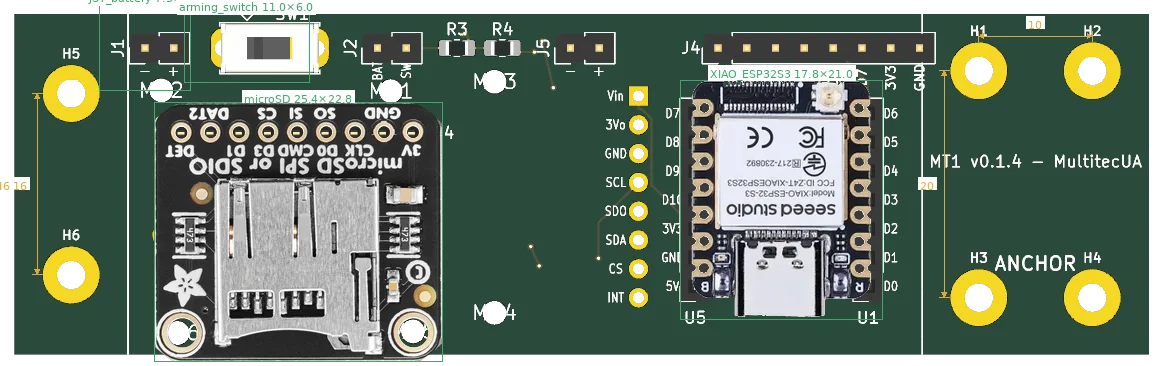
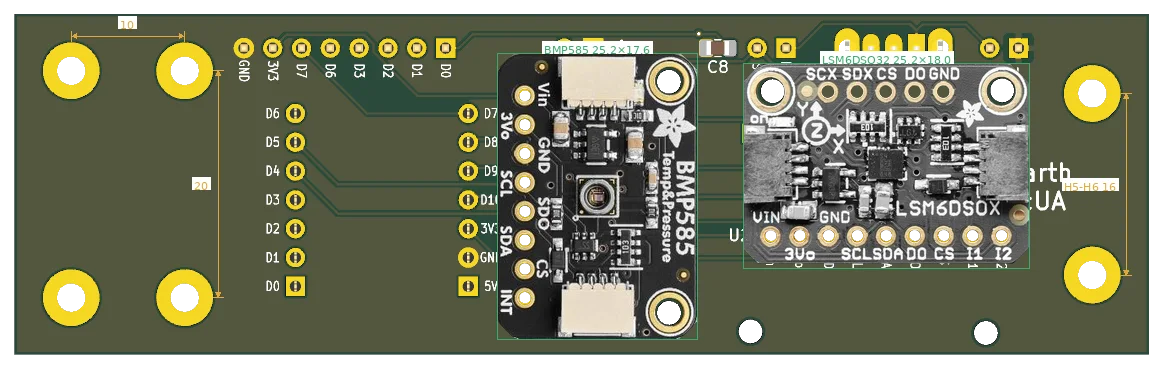
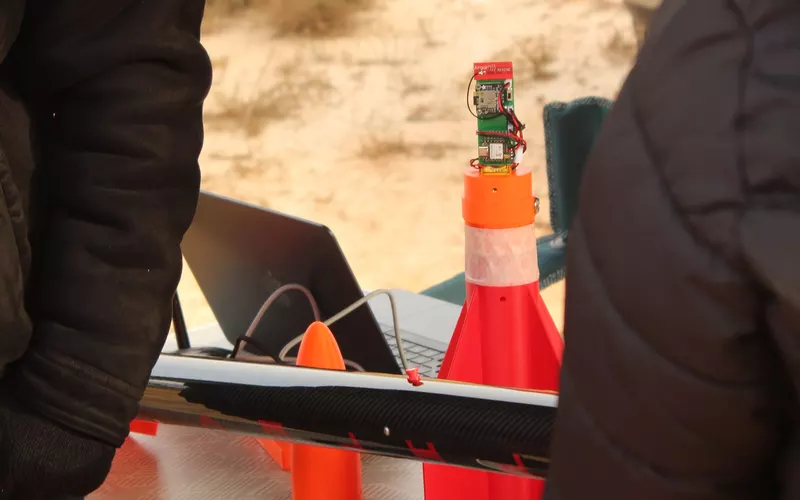
The MT1 board on its mount, on launch day: the flight computer that recorded Lucentum's whole flight.

1.38 m long, 60 mm across, 3.3 calibres of stability. The simulation with the 232H123 motor gave 586 m of apogee and 7.7 g; in flight we measured 7.8 g.
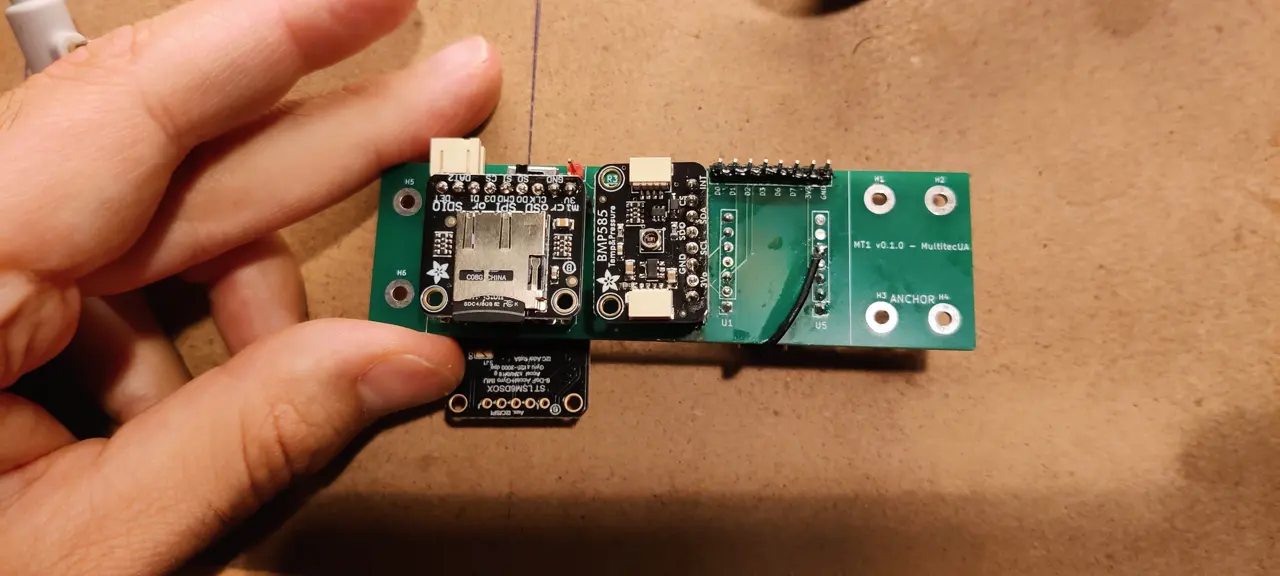
100 × 30 mm and about 38 g: XIAO ESP32-S3 microcontroller, ±32 g LSM6DSO32 IMU, BMP585 barometer and microSD.
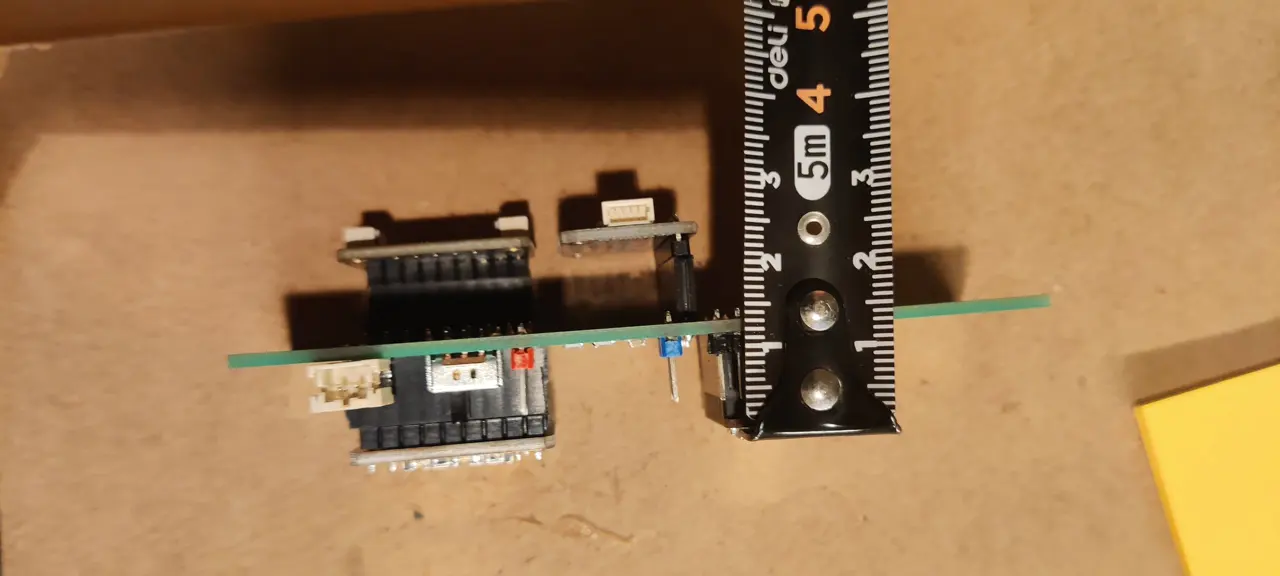
Barometer and inertial unit: with them we know altitude, acceleration and rotation at every instant.
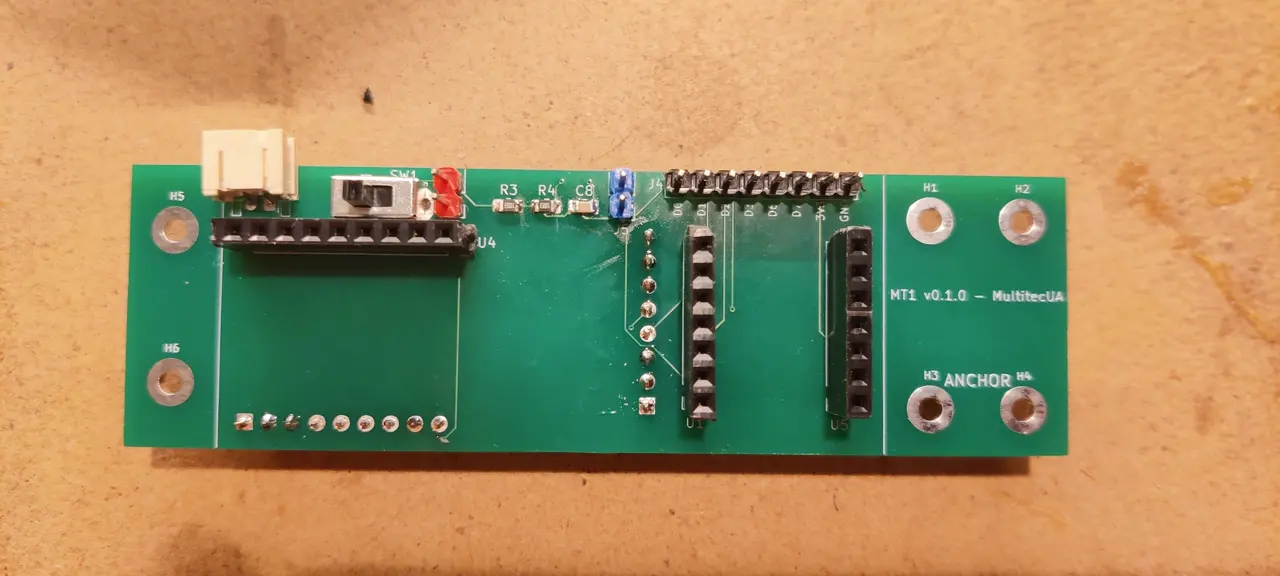
The first PCB batch, with only its connectors soldered: two sides, a 10 and 20 mm double anchor and every pin labelled in silkscreen.
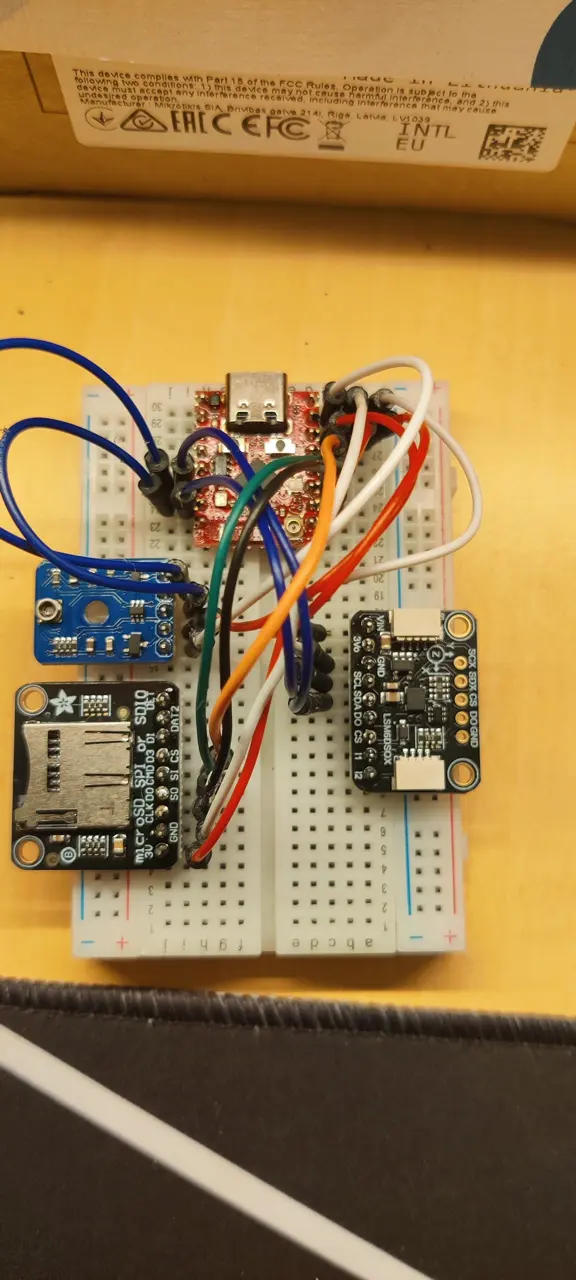
Before the PCB, everything on a breadboard to validate sensors, bus and logging.
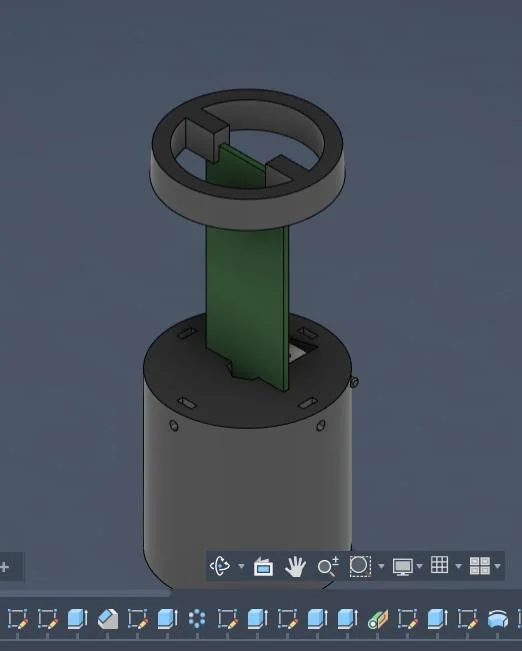
A CAD-designed mount that holds the board with a double anchor inside the tube.
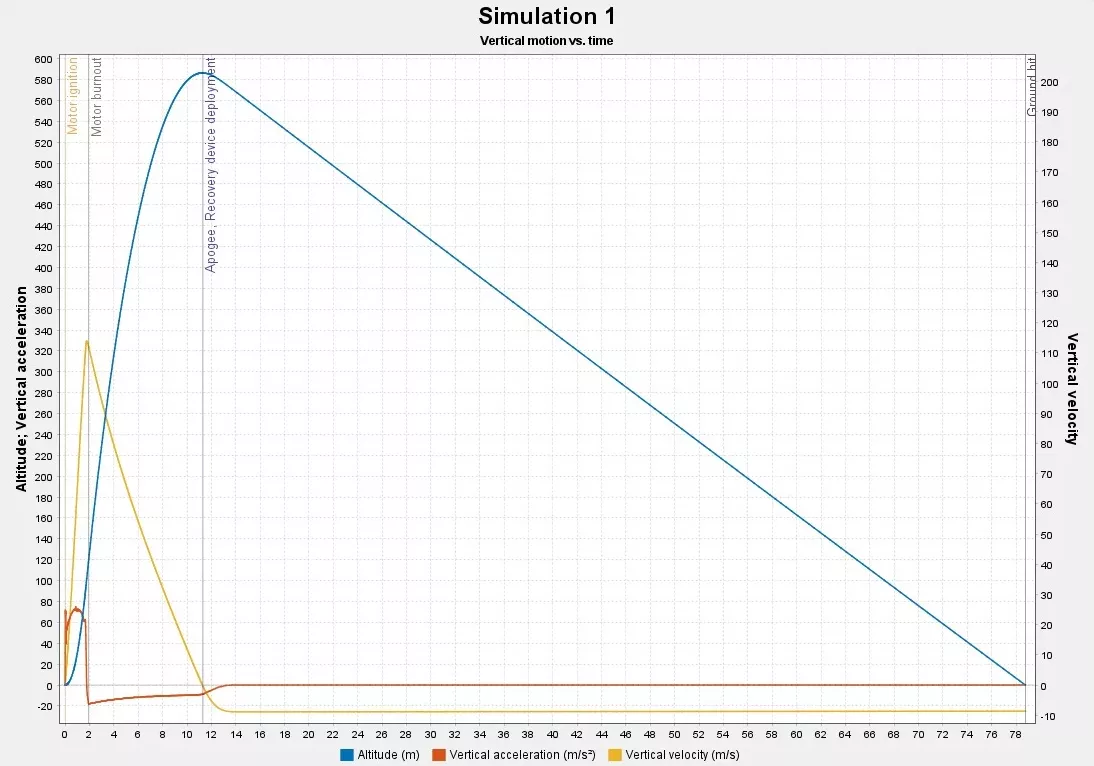
Predicted altitude, velocity and acceleration, the baseline to compare against the real flight.
MT1 · flown
Next · in design